Where the residue ends up
Hot smoke climbs straight to the roof and then travels sideways under the deck until it cools. Open-web steel joists, joist girders, corrugated roof deck, sprinkler piping, conduit runs and suspended unit heaters all sit in that layer. By the time the fire is out, a thin film can cover thousands of square feet of overhead steel that never saw a flame.
The type of residue depends on what burned. Wood pallets and cardboard leave a dry, powdery soot. Plastics, rubber, shrink wrap and foam produce oily, sticky residue that smears when wiped. Residue from burning PVC and some other plastics can contain chlorides that become corrosive on bare or galvanized steel once moisture is present, which is one reason cleaning is not usually something to postpone for months.
Before anyone climbs, the fire department and your insurer may need to finish their inspections, and a structural review may be needed where steel was directly heated. Steel that sagged or discolored from heat is an engineering question, not a cleaning question.
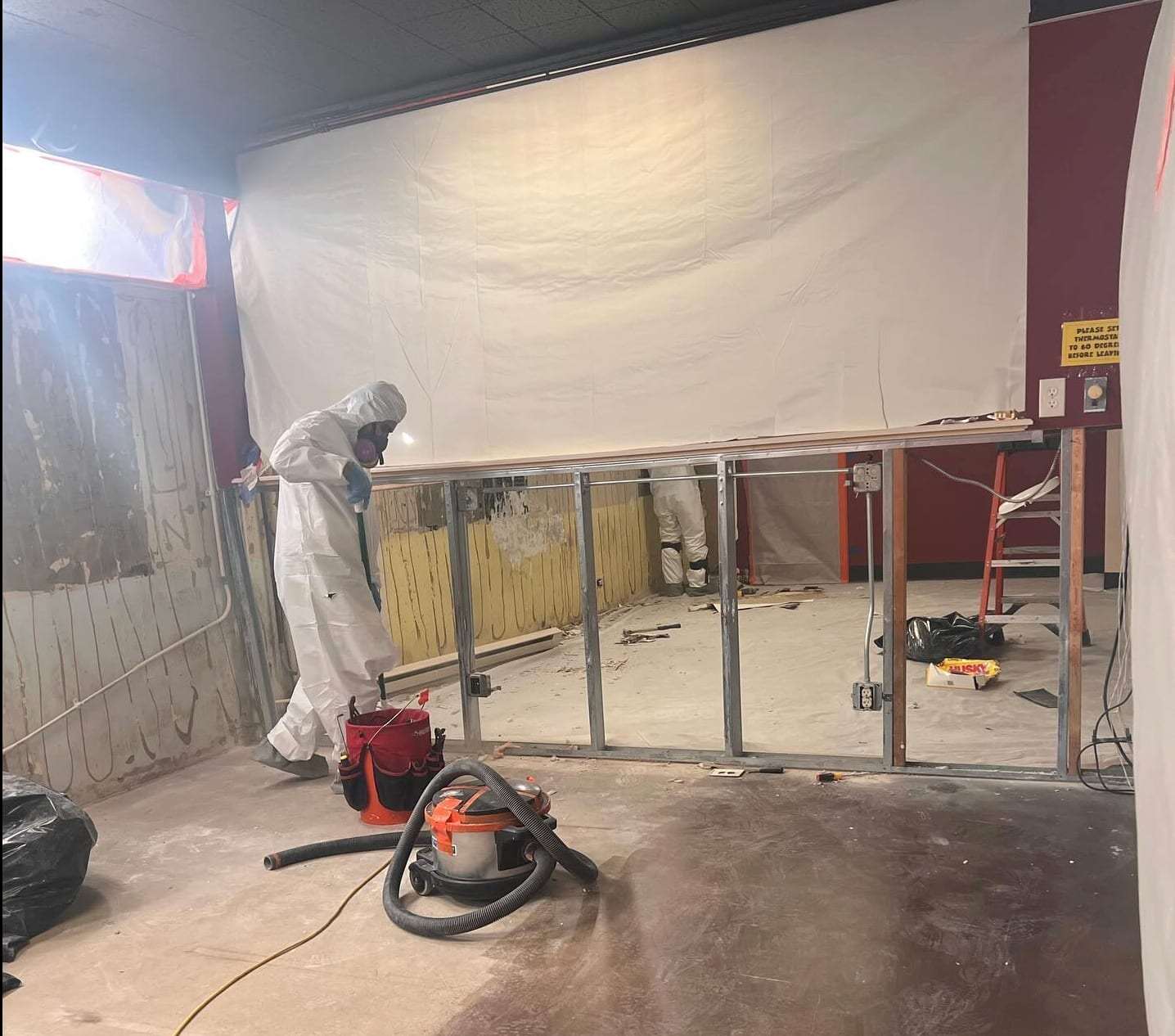
Commercial space stripped to the studs inside plastic containment. Example of the work involved; the photo does not show a specific property or a job for this site.
Common overhead cleaning methods
| Method | Often suited to | Watch for |
|---|---|---|
| Dry sponge or HEPA vacuum | Light, dry soot on painted steel and deck | Smearing if residue is oily; slow on large areas |
| Wet cleaning with detergents | Oily residue on reachable surfaces | Water running onto equipment, product or electrical below |
| Abrasive blasting (soda, dry ice or similar) | Heavy residue on large steel areas | Dust and containment needs, protecting what is below, noise |
| Sealing or encapsulating coating | Surfaces cleaned as far as practical, to lock in remaining odor | Coating over residue that should have been removed first |
| Replacement | Heat-damaged deck, insulation or components | Structural review and roofing coordination |
A sensible sequence for overhead work
Clear and cover below
Move or wrap inventory, machinery and racking under the work zone. Overhead cleaning drops residue and water.
Plan lifts and access
Confirm floor load limits for lifts, overhead obstructions, and lockout of cranes, conveyors or rail systems in the zone.
Test and choose methods
Clean test patches with two or three methods and compare them in daylight and under the building's lighting.
Work top down
Deck and joists first, then piping, ductwork and lights, then walls, racking and the floor last.
Address odor after cleaning
Odor control and any sealing step follow cleaning, not the other way around.
Common questions
Does the whole roof structure need cleaning if the fire was small?
Not always. Residue can be heavy near the fire and very light far away. Ask for wipe tests at different distances so the scope follows the actual residue rather than a guess.
General information for Commerce City, not a quote or professional advice. In an emergency, call 911.