A house-like space inside a concrete box
Most industrial buildings around Commerce City have an office area at one end or corner: a reception space, a few private offices, a conference room, restrooms and a break room, sometimes with a second level of offices on a mezzanine above. These areas are built with metal studs, drywall, suspended acoustic ceilings, carpet tile or vinyl plank, and plenty of furniture and paper.
Water reaches them from several directions. A sprinkler discharge or roof leak in the bay can run across the slab and under the demising wall. A supply line to a break-room sink or water heater can fail inside the office itself. Restrooms on the mezzanine can leak through to the offices below. Because the warehouse slab is often slightly lower or higher than the office floor, it is worth checking which way water actually flowed.
The same water that would dry on bare concrete in a day can leave the office with wet wall bottoms, sagging ceiling tile and swollen furniture bases that need decisions quickly. Moisture trapped behind vinyl wall base or under carpet tile adhesive can linger and lead to odor and mold growth if it is not found.
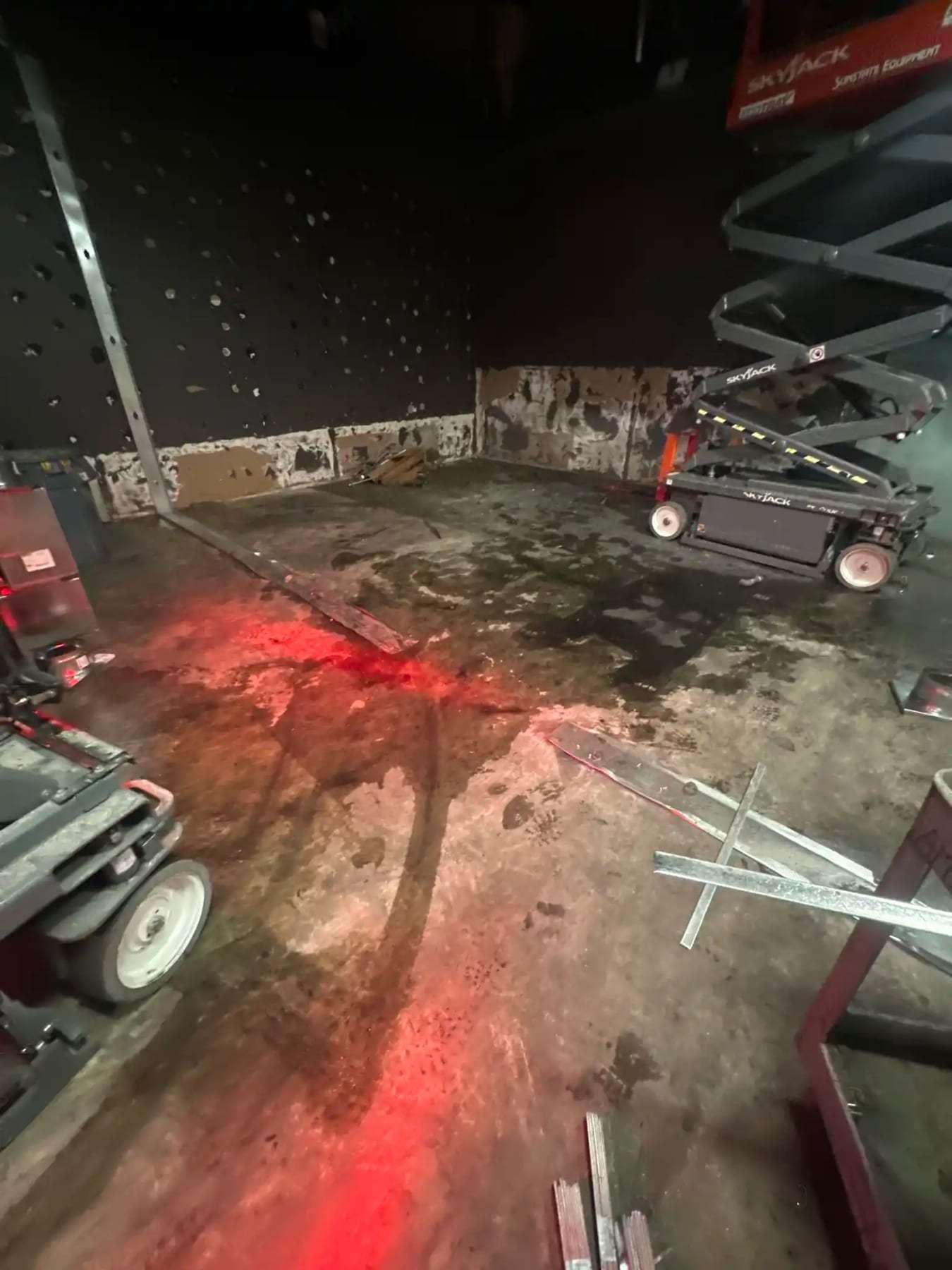
Warehouse floor seen from a lift with equipment below. A representative photo of the task, not a record of work at any particular property.
Office materials and what usually happens to them
| Material | How it reacts to water | Common outcome |
|---|---|---|
| Acoustic ceiling tile | Sags, stains and can fall when saturated | Usually replaced; grid often reusable |
| Drywall on metal studs | Wicks water upward from the floor | Bottom section cut out if it stays wet; studs usually kept |
| Vinyl wall base | Traps moisture against the drywall | Removed to let the wall dry |
| Carpet tile | Holds water in the backing and adhesive | Lifted to check the slab; reused only if clean water and quick action |
| Particleboard furniture and cabinets | Swells at the base and loses strength | Often replaced once swelling starts |
| Paper files and records | Wet quickly and can grow mold within days | Moved, frozen or sent for drying if they matter |
Sorting the first decisions
- IfCeiling tiles are sagging or drippingThenKeep people out from under them and have them taken down before they fall. Look above the ceiling for the source.
- IfWater came from a sewer line, restroom overflow or floor drain backupThenTreat porous materials it touched as contaminated and expect more removal. Keep staff out until cleaning is done.
- IfImportant records or drawings got wetThenMove them to a cool, dry space and ask about freezing them until they can be dried properly.
- IfComputers, copiers or network gear were in the water pathThenUnplug at the breaker if safe, do not power them up wet, and have IT or the manufacturer evaluate them.
- IfWalls read dry at the surface after a dayThenAsk for readings behind the base and at the bottom plate before deciding no cutting is needed.
Questions to ask about the office scope
- Which walls will be cut, how high, and why that height?
- Can the ceiling grid and light fixtures stay in place?
- How will office staff be relocated, and for how long?
- Who will handle furniture, files and electronics, and where will they be stored?
- Will reconstruction match existing finishes, or does the lease or landlord set standards?
General information for Commerce City, not a quote or professional advice. In an emergency, call 911.