The situation
Illustrative example. Not a real job or customer.
A hypothetical metal fabrication shop in a pre-engineered steel building near the I-76 corridor has a row of translucent skylight panels over its welding and cutting bay. A late-afternoon storm drops hail large enough to shatter several panels. Rain follows for half an hour, pouring onto welding stations, a plasma cutting table, stacked sheet steel and the floor. Broken plastic fragments are everywhere.
- Workers move out of the bay when the hail starts. Once it passes, the shop foreman keeps everyone out until the roof is no longer dropping debris.
- Power to the welding stations and cutting table is shut off at the disconnects and locked out.
- The owner photographs the broken panels from the floor, hailstones on the ground outside with a tape measure for scale, and the wet equipment.
- A roofer installs temporary covers over the openings the next morning; staff stay off the roof.
- A restoration provider removes water, clears fragments, and finds that faced insulation along the skylight row is soaked and sagging. It is removed and bagged.
- Sheet steel is separated and dried to limit surface rust; pieces with heavy rust are set aside for the adjuster.
- The equipment supplier's technician inspects the plasma table controls and welding power sources before they are energized.
In this example, the shop resumes partial work in an unaffected bay within days and returns to full production after equipment checks and permanent skylight replacement. Insulation is replaced when the new panels go in.
Why the order mattered
The temptation in a small shop is to sweep up and turn the machines back on, especially with orders waiting. The example shows why it pays to slow down at two points: getting the roof covered before drying, and getting wet electrical equipment checked before energizing it. Drying under an open roof would only last until the next storm, and powering wet welding equipment risks damage and injury.
Hail damage also tends to be argued over later. Clear, dated photos of hailstones, broken panels and wet equipment, taken before cleanup, give the adjuster what they need to connect the damage to the storm.
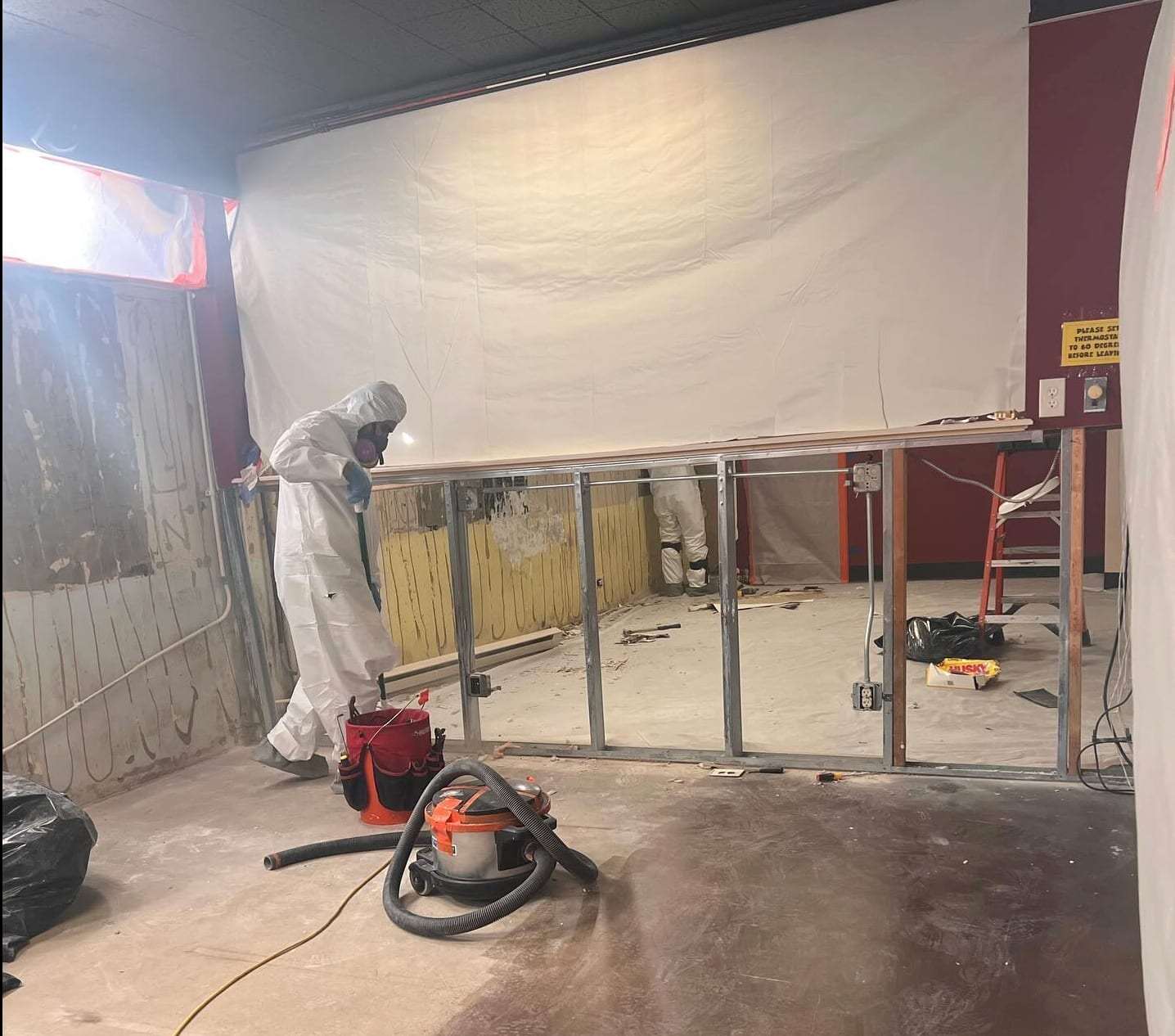
Commercial space stripped to the studs inside plastic containment. A general example of this kind of work, not a photo of a particular home, business or job.
What was affected and how it was handled
| Item | Damage | Handling in the example |
|---|---|---|
| Skylight panels | Shattered | Temporary cover, then replacement |
| Faced insulation | Saturated along the skylight row | Removed and replaced with roof repair |
| Welding and cutting equipment | Wet controls and power sources | Locked out until a technician cleared them |
| Sheet steel stock | Surface wetting and some rust | Dried, sorted, worst pieces set aside |
| Floor | Water and plastic fragments | Cleared, dried and checked for damage |
Questions this shop asked afterward
- Should the replacement skylights be a more impact-resistant product?
- How does the policy treat cosmetic hail dents on the metal roof panels?
- Could the welding bay be laid out so equipment is not directly under skylights?
- Is there a written list of what to shut off and cover when a severe storm warning is issued?
General information for Commerce City, not a quote or professional advice. In an emergency, call 911.