Full shutdown versus phased work
Full shutdown
- Restoration crews have the whole floor and work faster
- No containment between working and non-working areas
- Fewer safety conflicts with forklifts and trucks
- Lost production, missed shipments and idle staff
- May trigger business interruption questions with the insurer
Phased, zone by zone
- Part of the facility keeps operating and shipping
- Requires containment walls, negative air or barriers
- Traffic routes and dock schedules must be coordinated
- Total restoration time is usually longer
- Needs a daily coordination point between the facility and the provider
Building the plan
Start with a floor plan and mark three things: the damaged area, the areas that must keep running, and the paths between them. In a distribution building that usually means keeping at least some dock doors, a staging lane and a pick area open. In a plant it may mean isolating one line or bay while others continue. The restoration provider then proposes where barriers go, how equipment and debris enter and leave, and which hours each zone will be worked.
Containment in an industrial building is often temporary poly walls hung from the structure or framed with poles, sometimes with zipper doors for access. For smoke and dust work, the work zone may be kept under negative air pressure so residue does not drift into the operating side. For drying, the goal is usually to keep the work zone's air separate so dehumidifiers are not trying to dry the whole building.
Shift timing is a lever. Noisy or dusty work can be scheduled for nights or weekends when the facility can support it, and quieter drying can run while operations continue. Ask what the provider needs from facility staff on off-hours shifts, such as access, security and someone with authority to make decisions.
Conflicts to plan for
| Conflict | Why it matters | Typical fix |
|---|---|---|
| Forklift traffic near work zones | Collision and struck-by risk for restoration workers | Barriers, marked crossings and spotters |
| Dock appointments | Equipment deliveries and debris haul-off compete for doors | Dedicated door or set delivery windows |
| Temporary power | Generators or tie-ins for drying equipment add load and cords | Agreed cord routes and an electrician's input |
| Dust and odor | Product and staff in operating areas can be affected | Containment, negative air and filtration |
| Fire protection | Sprinkler impairments and blocked exits during work | Fire watch and maintained egress routes |
Agree on these before work starts
- A marked floor plan showing work zones, operating zones and travel paths.
- Named contacts on both sides who can make decisions each shift.
- Hours for each type of work and any quiet periods.
- Who controls lockout, utilities and alarm systems.
- Where restoration equipment, dumpsters and debris will be staged.
- How changes to the plan will be communicated and approved.
- A daily check-in time to review progress and next steps.
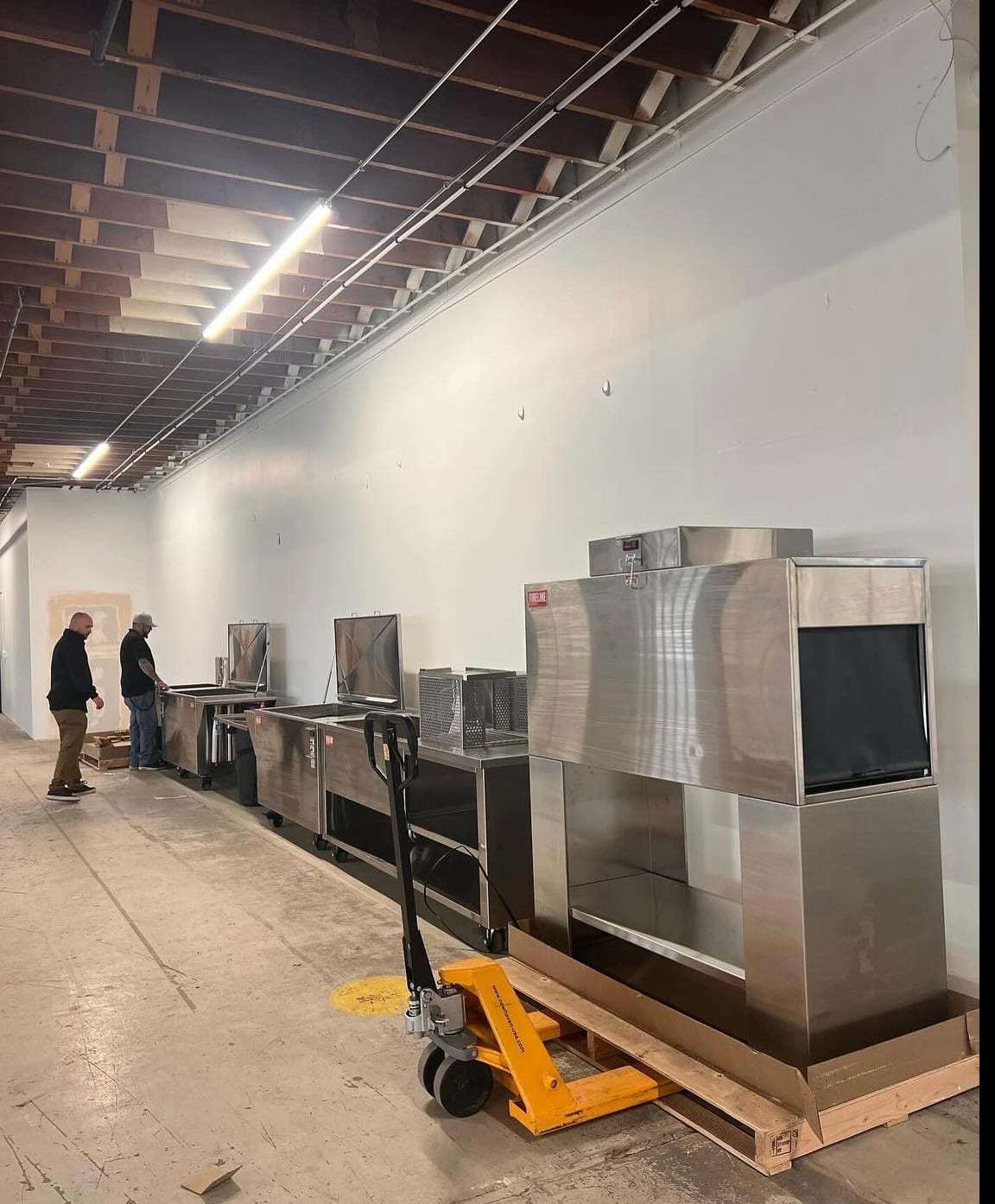
Stainless commercial kitchen equipment being moved into place. Illustrative only: this photo is not from a job tied to this site or a specific address.
General information for Commerce City, not a quote or professional advice. In an emergency, call 911.