The floor is a system, not just concrete
Many industrial floors carry something on top of the concrete: a clear sealer or densifier, a polished finish, a thick epoxy or urethane coating in production or food areas, painted safety lines and aisle markings, or a resilient flooring in break rooms and labs. Each reacts differently to standing water, cleaning chemicals and heat.
Water that sits under pallets, equipment bases or debris for days can work into joints and cracks and come up beneath coatings, causing blistering or loss of bond. Fire can scorch coatings near the source, and the cleaning used to remove soot can dull or soften some finishes. Fresh coatings over damp concrete are a common cause of later failures, which is why recoating usually waits for moisture testing.
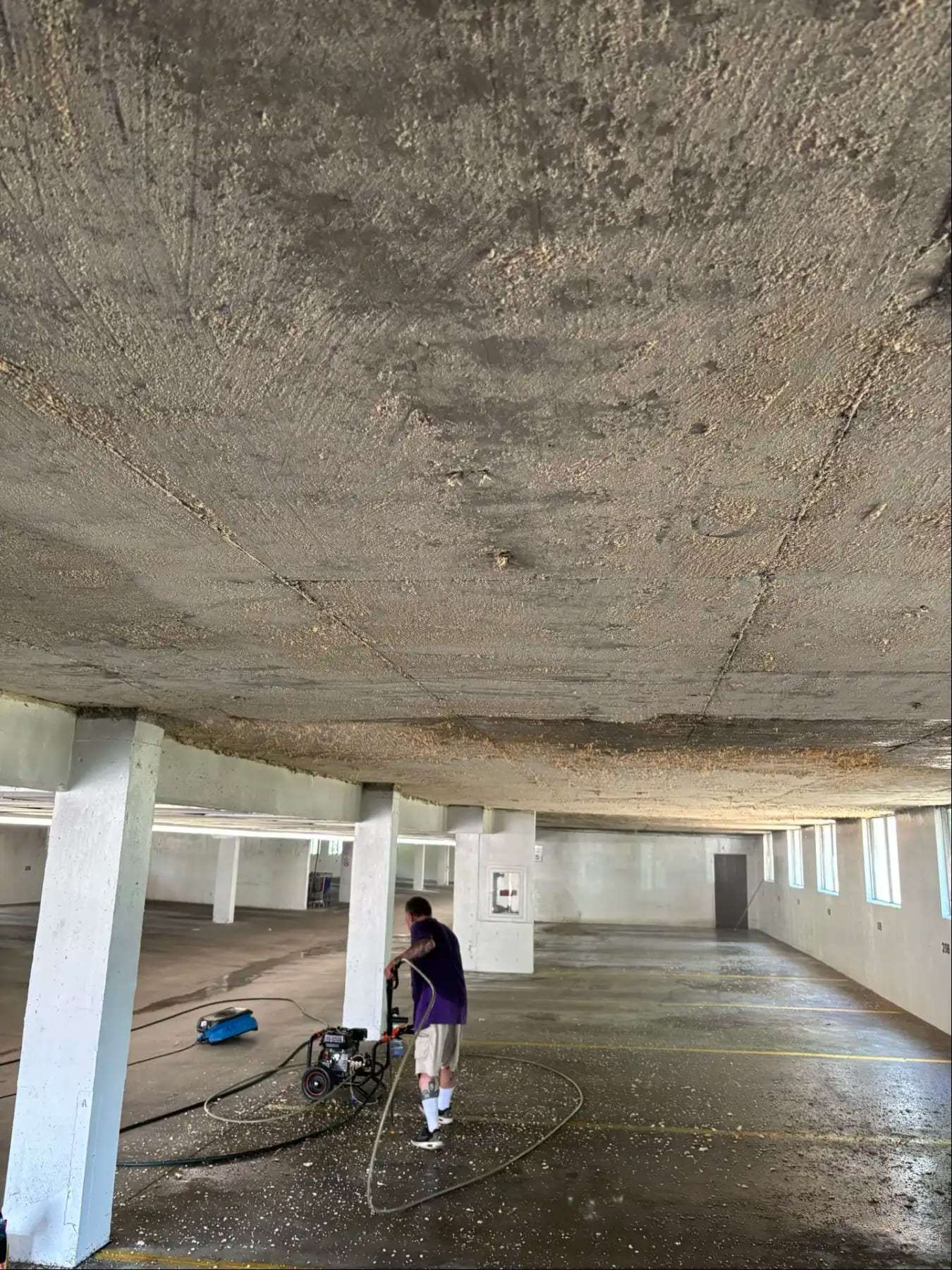
Worker pressure washing the floor of a parking garage. Shown to illustrate the work described; not a job for this site or at any address named here.
Points to keep in mind
- Surface dry is not slab dry
- Concrete can look dry within hours while moisture remains deeper, especially under pallets and equipment.
- Joints and cracks
- Saw cuts and control joints let water under coatings and into the slab.
- Coatings trap moisture
- A sealed or coated floor slows drying from the top.
- Testing standards exist
- Flooring and coating manufacturers usually specify moisture test methods and limits; follow theirs before recoating.
- Residue matters
- Soot, cleaning chemicals and rust stains can prevent new coatings from bonding.
Floor types and common post-loss concerns
| Floor finish | After water | After smoke or fire |
|---|---|---|
| Bare or densified concrete | Usually dries well; watch for rust stains from equipment | Soot cleans with appropriate methods; heat may spall concrete near the fire |
| Polished concrete | Water spots and staining | Residue can dull the finish; may need re-polishing |
| Epoxy or urethane coating | Blistering or delamination where water got underneath | Scorching, discoloration and softening near heat |
| Painted aisle and safety markings | Lifting where water undercut them | Soot staining; may need repainting for visibility |
| Vinyl or rubber in break rooms and labs | Adhesive failure and trapped water | Often replaced if residue or heat reached it |
Getting from wet floor to recoated floor
Remove water and lift what sits on the slab
Move pallets, mats and equipment where possible so the concrete beneath can dry.
Clean residue
Remove soot, rust and sediment with methods suited to the finish, tested in a small area first.
Dry and monitor
Use dehumidification and air movement and track readings in fixed locations over several days.
Inspect coatings
Look for blisters, hollow-sounding areas and peeling, especially near joints and walls.
Test before recoating
Have the coating installer test moisture by the method their product requires before applying anything new.
General information for Commerce City, not a quote or professional advice. In an emergency, call 911.